
Exploring blood-panel models for diabetes risk.
Research into HbA1c prediction, feature selection and class imbalance.


The challenge
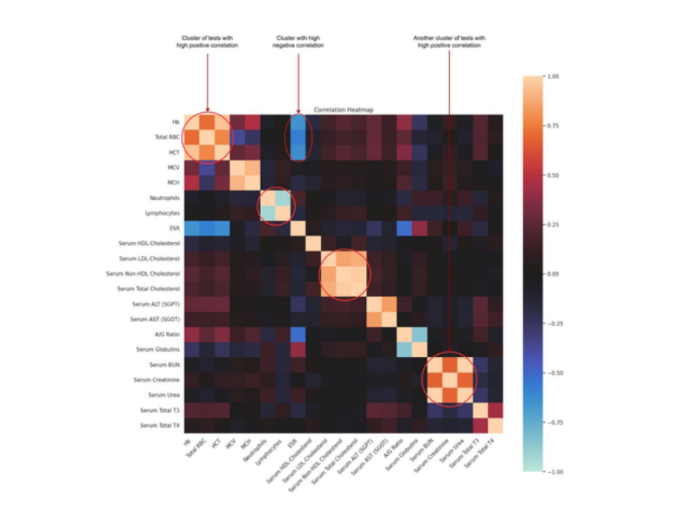
Blood panels contain many correlated measurements. The study examined how those features could support HbA1c prediction and risk-category modelling while accounting for clinical relevance and imbalanced classes.
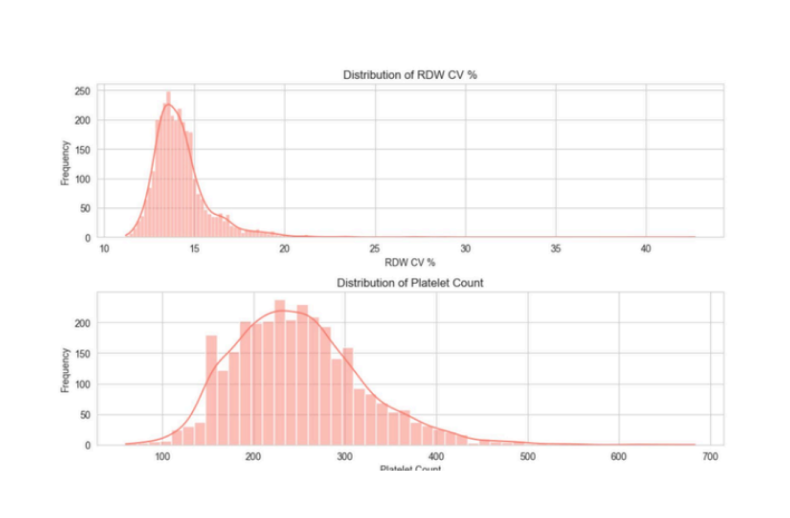
The study used regression and classification approaches, with feature selection informed by consultation with medical experts. It examined HbA1c-related categories and the effect of class imbalance on model evaluation.
Contribution and outputs
The modelling study used blood-panel measurements to estimate HbA1c and examine diabetes-risk categories.
- HbA1c regression and classification experiments
- Feature-selection work with clinical input
- Analysis of class imbalance
- Study-specific model evaluation
Outcome and limits
The findings are research outputs, not a clinical diagnostic service.
Explore the practiceRelated work
Connecting tax-risk analysis to officer action.
Data & Decisions

Data, rules and machine learning, connected to the people responsible for audit selection.
A connected path from SAP data to business analysis.
Data & Decisions

Extraction, transformation and analytics for a European data-solutions provider.