

Our Work / Project experience

AI and risk systems across the customs lifecycle.

Four connected modules, from goods descriptions to post-clearance review.

Customs AI and risk systems — conceptual artwork in graphite, silver and burgundy.

The challenge

Customs decisions depend on information gathered at different points in the trade lifecycle. Vague descriptions, scanned documents and fragmented transaction histories create different problems for declaration, assessment and audit teams.

The work addresses these problems through four distinct modules. Guided filing improves the structure of the initial declaration; document processing supports assessment; risk models inform examination routing; and post-clearance analysis examines patterns beyond an individual shipment. Each module supports a different decision and retains its own review controls.

Four connected capabilities.

Structured declarations

Guided-assistant design and development

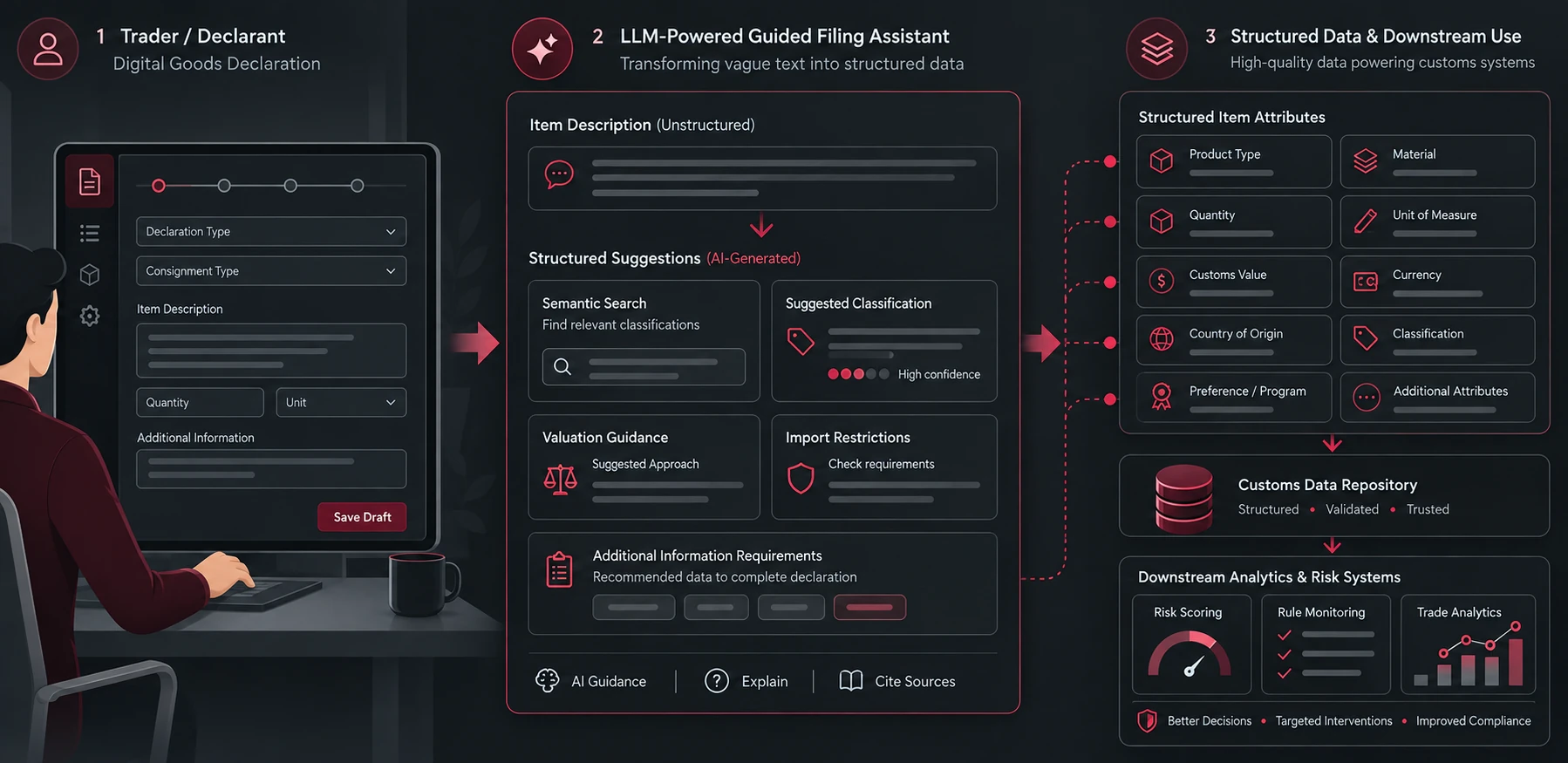
A guided filing assistant combines semantic tariff retrieval, regulatory references and targeted clarification questions to turn free-text product descriptions into structured goods-declaration data.

  • HS-code discovery and retrieval
  • Relevant rulings and information requirements
  • Product-attribute clarification
  • Structured declaration inputs
Guided-declaration design example linking a trader interface, tariff and regulatory assistance, structured item attributes and downstream customs analysis.
Recreated from the portfolio design. Interface content and confidence indicators are illustrative.

Faceless assessment

Document-processing pipeline engineering

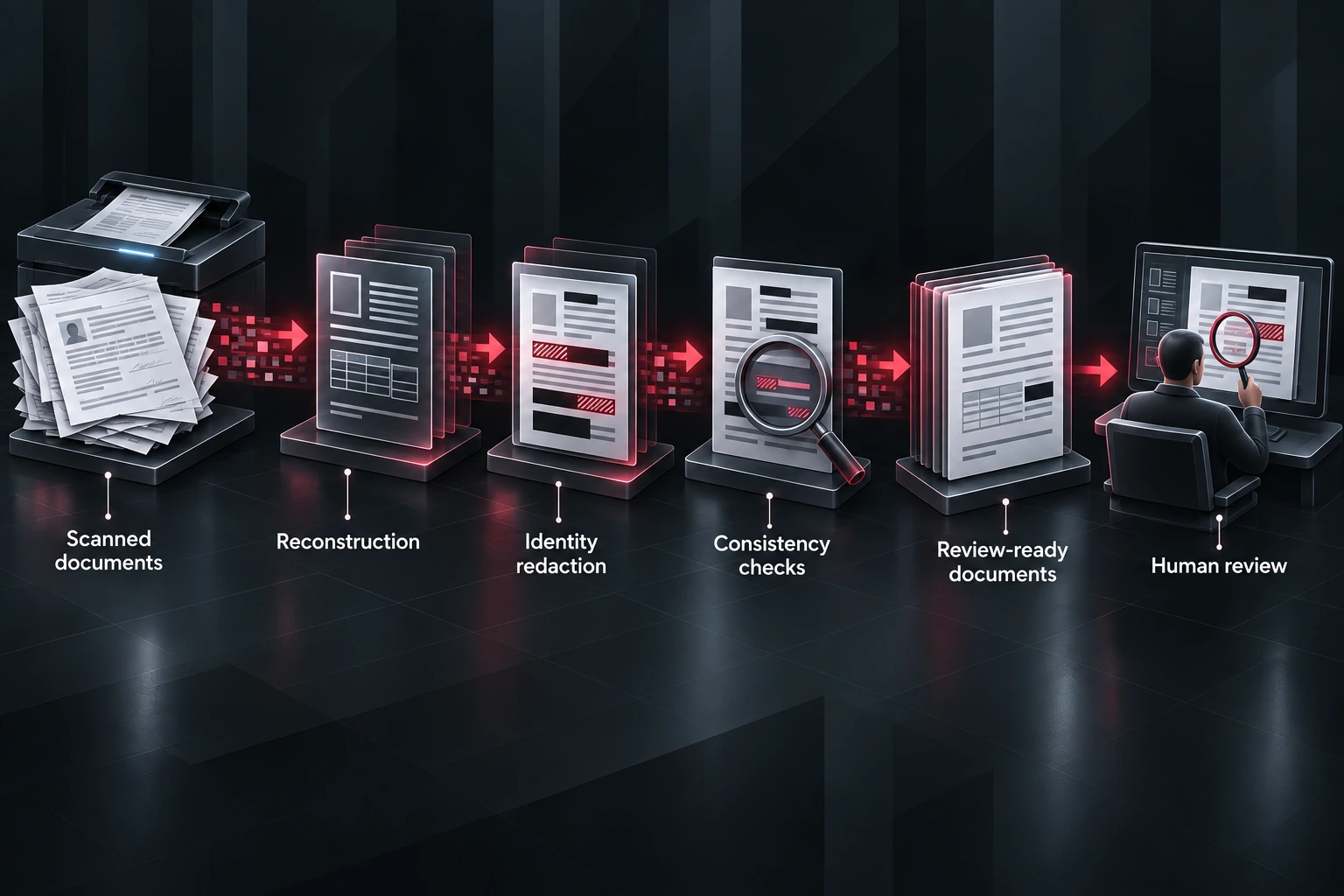
A multi-pass document workflow reconstructs scanned information, separates identity redaction from content processing and applies consistency checks before human review.

  • Document reconstruction
  • A separate identity-redaction pass
  • Consistency checks
  • Review-ready document outputs
Explanatory faceless-assessment workflow: scanned documents are reconstructed, identity details redacted and consistency checked before review-ready documents reach a human reviewer.

Clearance risk routing

Risk-model and decision-workflow development

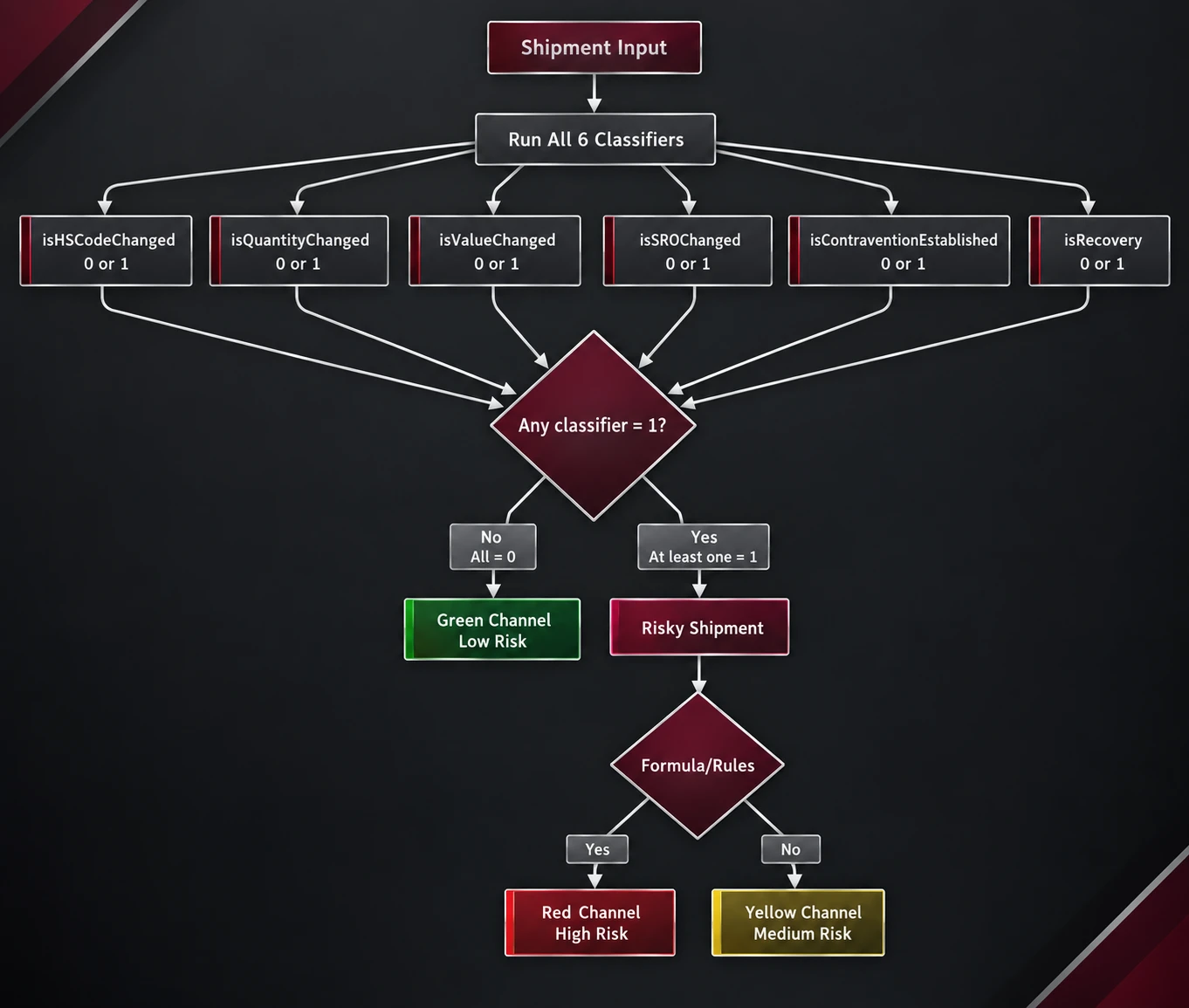
Risk analysis combines trader, commodity and transaction attributes with specialist model signals. Explanations connect the detected risk to the officer’s examination-routing decision.

  • Feature engineering across customs data
  • Risk-specific model signals
  • Shipment-level scores and routing recommendations
  • Officer-facing explanations
Shipment inputs feed six classifier signals, a risk check, and green, red or yellow customs-channel routing.
Recreated from the source classifier and customs-routing diagram.

Post-clearance audit

Audit-analysis modules and job orchestration

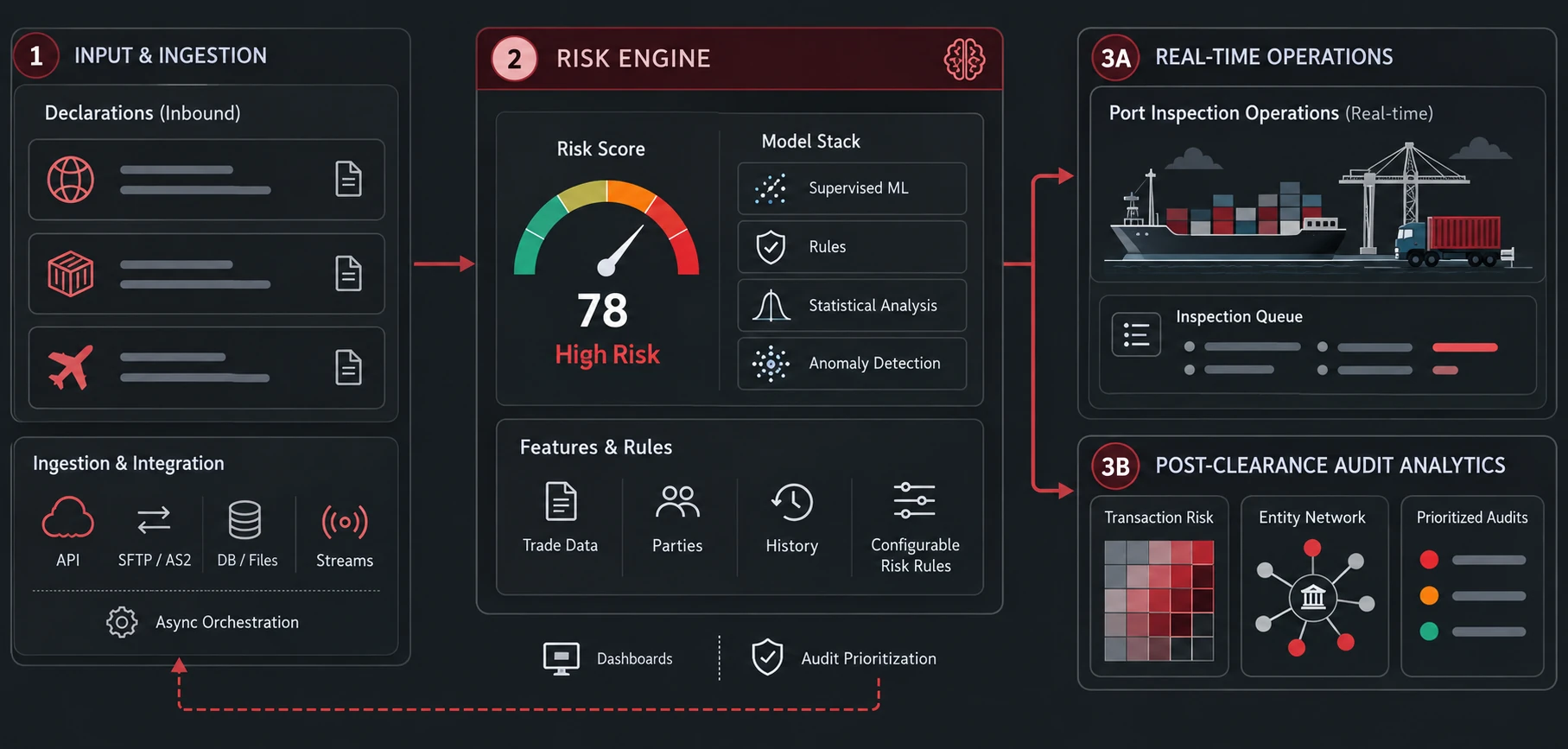
Rules, statistical checks and unsupervised learning examine transaction, entity and sector patterns after clearance. Configurable parameters and asynchronous jobs support changing audit priorities.

  • Layered rules and statistical checks
  • Transaction, entity and sector views
  • Configurable thresholds and audit parameters
  • Asynchronous analysis-job orchestration
Risk and post-clearance review design example connecting declaration inputs, analytical models, operational review and audit panels with illustrative values.
Recreated from the portfolio design. The score and dashboard values are illustrative.

Contribution and outputs

Primea’s customs work spans guided declarations, document assessment, clearance risk analysis and post-clearance audit systems.

  • Guided declaration and tariff-retrieval functionality
  • Document reconstruction and redaction workflow
  • Shipment-level risk signals and explanations
  • Configurable post-clearance audit analysis

Related work

Bring us the hard part.

Discuss your challenge